
15 October 2026
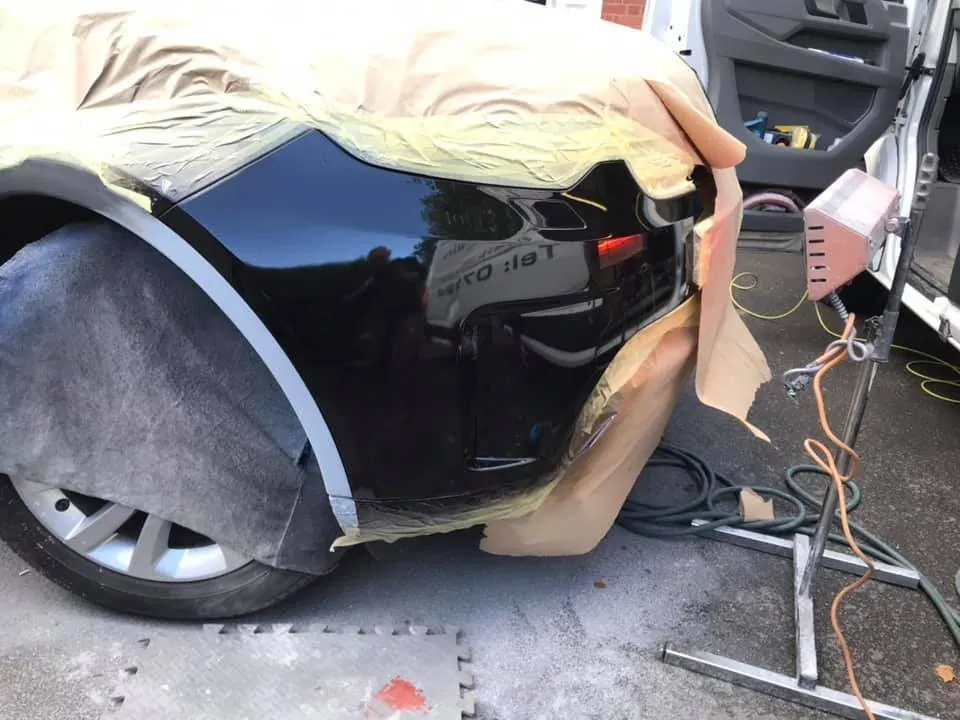
If someone's opened their door into yours in a car park, or a trolley has rolled into the wing, the dent can look like a big-bodyshop job. Often it isn't. Where the paint is still intact, the panel can usually be worked back to shape without any filler and without repainting at all. That's paintless dent removal — one of the neatest, least invasive repairs there is.
This guide explains what paintless dent removal (PDR) actually is, the dents it fixes beautifully, the dents it genuinely can't touch (we'd rather tell you straight), how it compares with filling and respraying, and why the home remedies you'll find online usually make things worse.
What paintless dent removal actually is
PDR is a repair method, not a product. Instead of filling a dent and spraying over the top, the technician works the metal itself — gently pushing it back from behind the panel with specialist rods, or using tabs and a puller on the outside — until the surface sits flush again. Nothing is sanded, filled or sprayed, so your car keeps its original factory paint.
That last part matters more than people realise. Factory paint is applied and baked at the plant, and it's very hard to match perfectly once a panel has been resprayed. If the original finish never comes off, there's simply nothing to match. PDR is slow, patient, hands-on work — reading how the metal wants to move and easing it back a fraction at a time. Done properly, there's no trace a dent was ever there.
What PDR fixes well
PDR is at its best on dents where the paint is unbroken. That covers a surprising amount of everyday damage:
- Car-park dents and door dings — the classic "someone caught my door".
- Shallow dents from trolleys, footballs, or a bike falling against the car.
- Minor creases that haven't stretched or folded the metal.
- Hail-style damage — lots of small, round dents with the paint still intact.
- Dents on larger, flatter panels such as doors, wings, bonnets and tailgates, where there's room to work from behind.
The common thread is simple: if you run a finger over the dent and the paint feels smooth and unbroken, there's a good chance PDR is the right call.
What PDR can't fix (the honest bit)
PDR is brilliant, but it isn't magic — and anyone who tells you it fixes everything isn't being straight with you. It can't do much with:
- Cracked, chipped or flaking paint. Once the paint is broken, pushing the metal back won't put the paint back.
- Sharp, deep creases where the metal has folded hard on itself.
- Stretched metal — if a panel has been pushed so far that the metal has overstretched, it won't settle flush again.
- Edge and seam damage — dents right on a panel edge, a body line or a welded seam, where there's no access behind and little give in the metal.
- Plastic bumpers — these flex and are painted differently, so they're never a PDR job.
When a dent falls into one of these, the right fix is a conventional, colour-matched paint repair — the area is reshaped and filled where needed, then primed, sprayed and blended into the surrounding paint so the repair disappears. We do that on your driveway too, matching your car's actual colour on site. Bodywork and paint repairs carry a 3-year guarantee. You can read more about that side of the work on our scratch and dent repair page.
PDR vs filling and respraying
These two approaches aren't rivals so much as the right tool for different damage.
PDR keeps the factory finish, involves no paint, and is usually the quicker of the two because there's no masking, spraying or curing time. Where the paint is intact, it's almost always the better starting point.
Filling and respraying comes into its own the moment the paint is broken, the metal is creased or stretched too far, or the dent sits somewhere PDR can't reach. It's a thorough repair, but it means colour-matching and blending paint, which takes longer.
An honest repairer will look at your specific dent and tell you which one it needs — and won't talk you into the bigger job when the smaller one will do.
The DIY hacks — and why they usually backfire
Search for "remove a dent yourself" and you'll find the same handful of tricks: boiling water or a hairdryer, a can of compressed air for the "cold shock", and suction-cup pullers off the internet.
Here's the honest version. Those heat-and-cold tricks rely on plastic springing back into shape — they do very little to a metal panel. Suction pullers only grab the softest, shallowest dents, and when they do move something they tend to pull unevenly, leaving a raised high spot or a ring around the dent. Levering or pressing from behind without knowing how the metal behaves can stretch it or crack the paint.
The real risk isn't that these tricks don't work — it's that they can turn a straightforward paintless job into a fill-and-respray. If you've already had a go, no judgement at all; just mention it when you send your photos, as it helps us see what we're dealing with.
How long does it take?
A single, accessible dent is often quick — part of an afternoon. Several dents, a trickier spot, or trim and panels that have to come off first will all add time. We'd always rather take the time to get it right than rush and leave a high spot behind. Because it's a mobile service, it all happens on your driveway while you get on with your day — you don't lose the car to a garage for days on end.
What affects the price
There's no set price list for dents — every one is priced on the damage in front of us. The main things that move the price are the size and depth of the dent, how many there are, where it sits on the panel (edges and body lines are harder than open, flat areas), and how easy it is to reach the back of the panel. That's why we won't quote blind over the phone. Send a photo and you'll get a free, fixed quote for your exact dent. For a fuller picture of how body repairs are priced, see our guide to what mobile car body repair costs in Manchester.
Mobile dent removal across Greater Manchester and Cheshire
We come to you — at home or at work — anywhere within about an hour of Stockport. That takes in south Manchester, Altrincham, Hale, Timperley and Sale, out to Wilmslow, Knutsford, Poynton and across Cheshire. All we need is somewhere off-road to work, such as a driveway or a workplace car park, and a power socket if the repair needs any paintwork; otherwise we bring everything with us.
Get a free photo quote
Not sure whether your dent is a paintless job or a paint repair? Send a couple of clear photos in daylight — a close-up and a wider shot — on WhatsApp to 07939 105124, and Steve will come back with a free, fixed quote and an honest view on the best way to fix it. No obligation, and no pressure to book.
Frequently asked questions
What is paintless dent removal?
Paintless dent removal (PDR) is a method of working a dent out of a metal panel from behind, using specialist rods or external pullers, until the surface sits flush again. There's no filler and no repainting, so your car keeps its original factory paint.
Does PDR work on every dent?
No. It works best where the paint is still smooth and unbroken — car-park dings, shallow dents and hail-style damage. If the paint is cracked, the metal is stretched or sharply creased, or the dent sits right on an edge, PDR can't fix it and a colour-matched paint repair is the right call instead.
What dents can't be repaired with PDR?
Dents with cracked, chipped or flaking paint, sharp or folded creases, stretched metal, damage on a panel edge or welded seam, and anything on a plastic bumper. These need a conventional paint repair, which we also carry out on your driveway.
Is PDR better than filling and respraying?
Where the paint is intact, usually yes — it keeps the factory finish and is quicker because there's no spraying or curing. The moment the paint is broken or the metal is too far gone, a colour-matched paint repair is the better option. We'll tell you honestly which one your dent needs.
Can I do paintless dent removal myself?
We'd gently advise against it. Boiling water, hairdryers and cheap suction pullers rarely shift a real metal dent, and they can stretch the metal or crack the paint — which turns an easy job into a fill-and-respray. If you've already tried, just let us know when you send your photos.
How long does PDR take?
A single, accessible dent is often done in part of an afternoon. Several dents, a trickier location, or trim that has to come off first will take longer. We'd rather take the time to finish it properly than rush it.
Do you come to me for dent removal?
Yes — we're fully mobile and work on your own driveway or workplace car park anywhere within about an hour of Stockport, across Greater Manchester and Cheshire. All we need is somewhere off-road to work.
Need a SMART repair in Manchester or Cheshire?
We come to your driveway — most jobs completed the same day.
Call 07939 105124Get a Free Quote